

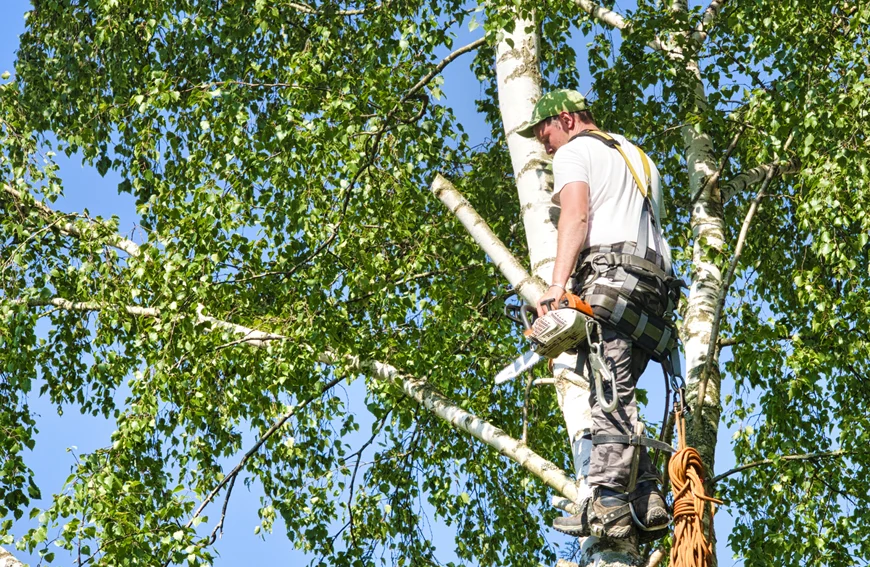
Summer storms have already left their mark on the Greater Toronto Area this year, with high winds toppling trees and knocking out power across the region. Combined with full leaf cover that makes hazards easier to spot, summer is actually one of the most practical times of year to deal with a problem tree, as long as you understand the extra factors that come into play.
If you’re weighing whether to remove a tree this season, here’s what to consider before calling in the crew.
Why Summer Removal Makes Sense
A tree in full leaf shows you things a bare winter tree can’t. Thinning canopies, dead or dying limbs, fungal growth, and lopsided growth patterns are all far more visible once the leaves are out.
Summer is also storm season in Ontario, and damaged or weakened trees are more likely to fail during high winds:
- Split trunks or major limbs from wind and lightning
- Trees leaning further than before a storm
- Roots visibly heaved or loosened in the soil
- Cracking or hollow sounds when the trunk is tapped
A tree that survived a storm intact isn’t necessarily out of danger. Hidden internal damage can take weeks to show, which is why a post-storm inspection is worth scheduling even if nothing looks obviously wrong. Our storm and emergency tree services team handles both urgent hazard removals and precautionary assessments after severe weather.
Heat and Drought Stress
Extended heat and dry spells put real strain on trees, especially younger or recently transplanted ones. Stressed trees are more vulnerable to pests, disease, and branch failure, and the effects sometimes don’t show until later in the season.
Watch for:
- Scorched or browning leaf edges
- Premature leaf drop in July or August
- Wilting that doesn’t recover overnight
- Bark that’s splitting or peeling in patches
Not every stressed tree needs to come down. A certified arborist can often tell the difference between a tree that will recover with proper watering and one that’s declining beyond saving.
Permits and Municipal Bylaws
Almost every municipality in the GTA regulates tree removal on private property, and the rules vary block by block. Toronto requires a permit for private trees 30 cm or more in diameter measured at breast height, while Richmond Hill, Markham, Vaughan, and Mississauga each set their own thresholds and replacement planting requirements.
Removing a protected tree without approval can mean significant fines, so it’s worth confirming your tree’s status before any cutting begins. Our tree removal permit service handles the paperwork and municipal coordination so the process doesn’t stall your project.
Nesting Birds and Summer Timing
One factor unique to summer removal is nesting wildlife. Migratory birds are protected under federal law in Canada, and disturbing an active nest can create legal complications even on your own property.
Before any summer removal, a quick check for active nests is standard practice. If nesting activity is found, removal may need to be delayed until the young have fledged, which is typically a matter of weeks rather than months.
Signs It’s Time to Remove, Not Wait
A tree doesn’t need to be completely dead to be a liability. Situations that generally call for removal rather than monitoring include:
- More than 50% of the crown is dead or declining
- The tree is leaning toward a structure, driveway, or power line
- Large cavities or fungal conks are present at the base or trunk
- Roots have been significantly damaged by construction or grading
- The species is highly susceptible to a pest already established in your area, such as emerald ash borer in ash trees
If you’re unsure which category your tree falls into, an arborist report gives you a documented professional opinion, which is also useful if a permit application or insurance claim is involved.
What to Expect During the Job
Summer removals follow the same core process as any season, with a few adjustments for heat and foliage. Crews typically start early in the day to avoid peak afternoon temperatures, and full leaf cover means more debris to manage during cleanup.
Once the tree is down, most homeowners choose to have the stump handled in the same visit rather than leaving it behind. Our stump grinding service clears the area completely, so the space is ready for replanting or landscaping right away.
Getting Started
Between recent storm damage across the GTA and the visibility that comes with full summer foliage, now is a practical time to have a problem tree assessed rather than waiting until fall. Our certified arborists serve Richmond Hill, Toronto, Markham, Vaughan, Aurora, Newmarket, and the surrounding GTA.
Request a quote or call us at (416) 990-3355 to book a summer assessment.