

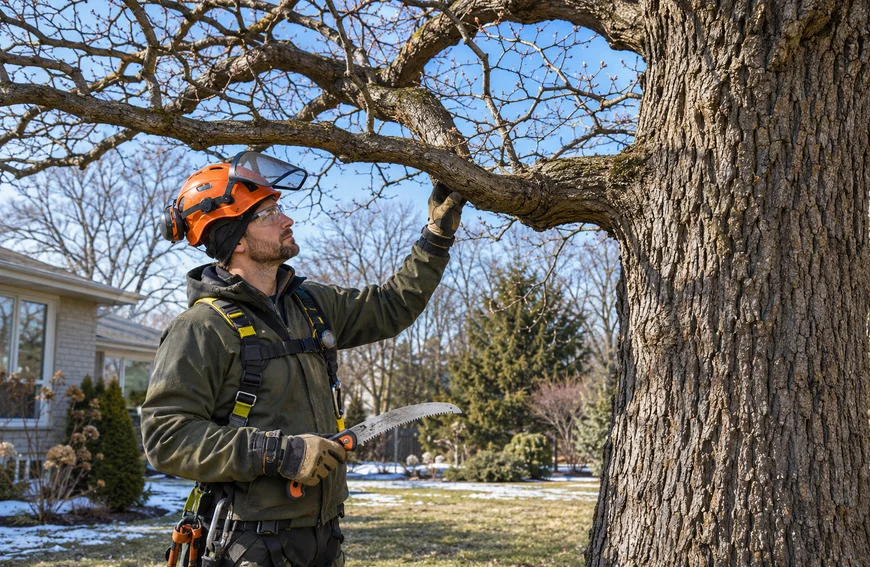
If you have a mature oak on your property, the timing of its next pruning matters more than you might think. Oak wilt, a fatal tree disease that arrived in Ontario in 2023, spreads most easily through fresh wounds made in spring and summer. That’s why residents are asked to avoid pruning oaks from April until November.
The good news is that the risky season has now ended. Late fall and winter are the safe window to prune, shape or repair your oaks. Here’s what GTA homeowners should know about oak wilt in Ontario and how to time oak care properly.
What Is Oak Wilt?
Oak wilt is a disease caused by the fungus Bretziella fagacearum. The fungus grows in the water-conducting tissue of the tree and blocks the flow of water and nutrients to the leaves. The tree then wilts from the top down, much like a plant that hasn’t been watered.
It has been killing oaks in the United States for decades. In 2023 it was confirmed in Canada for the first time, in Niagara Falls. It has since been found in Niagara-on-the-Lake and in Springwater Township in Simcoe County, north of York Region. With oaks common across Toronto, Richmond Hill, Aurora and the rest of the GTA, local homeowners have good reason to pay attention.
Why Red Oaks Are Most at Risk
All oaks can get oak wilt, but the two main groups react very differently:
- Red oak group (northern red oak, pin oak, black oak): These trees have pointed leaf lobes and are highly susceptible. Once infected, a red oak can die in as little as 2 to 6 weeks.
- White oak group (white oak, bur oak, swamp white oak): These have rounded leaf lobes and are more resistant. They usually decline branch by branch over several years and can sometimes be managed.
Northern red oak is one of the most widely planted and naturally occurring oaks in the GTA, which is why the disease is taken so seriously here.
How Oak Wilt Spreads
Oak wilt moves in two main ways.
Sap Beetles Above Ground
On infected red oaks, the fungus forms spore mats under the bark that give off a sweet, fruity smell. Small sap beetles feed on these mats and pick up spores. They’re then attracted to the sap of fresh wounds on healthy oaks, where they drop the spores and start a new infection. A single pruning cut or a lawnmower scrape in June can be enough.
Root Grafts Below Ground
Oaks of the same species growing close together often fuse their roots underground. Once one tree is infected, the fungus can travel through these root grafts into neighbouring oaks. This is how the disease spreads through a street or a wooded lot even when no beetles are involved.
The Oak Pruning Calendar
Because sap beetles are active and spore mats form in the warmer months, timing is your best defence:
- April to November: Avoid pruning. This is the high-risk period in Ontario. Don’t prune, cut or wound oaks unless there’s an urgent safety hazard.
- Late November to March: Safe to prune. Beetles are inactive and the fungus isn’t producing spores, so fresh cuts aren’t at risk of infection.
The City of Toronto follows the same principle. Its pruning guidelines prohibit pruning oak and elm trees that the City maintains between April and October. If the City takes this precaution with its own trees, it’s a smart rule for private property too.
Winter pruning has other benefits. With the leaves gone, an arborist can see the full branch structure, spot deadwood and weak unions, and make cleaner cuts. Frozen ground also protects your lawn and garden beds from equipment.
If your oak needs deadwood removal, crown thinning or clearance from your roof, now is the time to book it. Our tree trimming and pruning team schedules oak work during the safe dormant season.
What to Do If an Oak Is Damaged in the Risk Season
Storms, construction and lawn equipment don’t follow a calendar. If an oak is wounded between April and November:
- Apply a thin layer of wound paint or shellac to the wound immediately. Speed matters, since beetles can find a fresh wound within minutes.
- Don’t seal the whole branch or use thick tar. A light coat over exposed wood is all that’s needed.
- If a storm has left broken or hanging limbs, have them cut back cleanly and the cuts treated right away rather than waiting.
This is one of the rare cases where arborists recommend wound dressing. For most other trees, it isn’t needed.
Don’t Move Firewood
Firewood from infected oaks can carry the fungus for months and can still produce spore mats. Moving it from one area to another is one of the fastest ways oak wilt jumps to new places. Buy firewood close to where you’ll burn it, leave it behind after camping, and never bring oak wood home from areas where the disease has been found.
This is the same advice that helps slow other threats like the emerald ash borer and spongy moth.
Oak Wilt Symptoms to Watch For
Oak wilt is easiest to spot in summer. Watch for these signs:
- Leaves that wilt, curl or turn dull green, bronze or brown starting at the outer edges and moving inward
- Browning that starts at the top of the crown and moves down quickly
- Heavy leaf drop in mid-summer, including leaves that are still partly green
- Cracks in the bark of red oaks with grey fungal mats underneath and a sweet smell
- Several nearby oaks declining one after another
Other problems, such as drought stress, anthracnose and two-lined chestnut borer, can look similar. A proper diagnosis requires a lab test.
How to Report a Suspected Case
Oak wilt is a regulated pest in Canada, so suspected cases should be reported to the Canadian Food Inspection Agency (CFIA). You can contact the CFIA through its website, or report through Ontario’s Invading Species Hotline at 1-800-563-7711. Don’t cut down, prune or move wood from a suspect tree until it’s been assessed.
For more background on the disease, see the Invasive Species Centre’s oak wilt guidance. If you’re considering treatments for any tree pest, read our guide to tree pesticides in Ontario first.
Book Your Oak Pruning This Winter
The safest time to care for your oaks is right now, while the trees are dormant. Five Star Tree Services helps homeowners across the GTA prune, inspect and protect their oaks at the right time of year.
Call (416) 990-3355 or request a free quote. We’re based at 156 Duncan Rd, Richmond Hill.