If you own a home in Toronto with a mature tree on the lot, the rules around that tree just got stricter. On September 1, 2026, a package of amendments to the City’s tree bylaws came into force, and several of them affect everyday homeowners, not just developers.
This guide breaks down what changed, what stayed the same, and what you should do before booking any tree work this fall.
Key Takeaways
- The private tree protection threshold is still 30 cm in diameter, for now
- Healthy trees over 61 cm now fall into a new “Distinctive Tree” category
- Trees planted through development or enforcement are protected at any size
- Penalties for unpermitted removal are harder to escape
- A new grant for maintaining large private trees opens October 15
Where These Changes Come From
Toronto City Council adopted the Tree Bylaw Review recommendations in March 2026 under agenda item 2026.IE27.8. The changes were enacted through By-law 402-2026, which amends Chapter 813 (Trees) and Chapter 658 (Ravine and Natural Feature Protection) of the Municipal Code.
The City frames the update around its goal of reaching 40% tree canopy cover by 2050. You can read the full summary on the City of Toronto’s Tree Bylaw Review page.
The 30 cm Threshold Hasn’t Changed Yet
You may have seen headlines saying Toronto dropped its protected tree size to 20 cm. That isn’t in effect. Council endorsed the 20 cm threshold in principle, but it’s waiting on further analysis and an implementation plan due in a 2027 committee report.
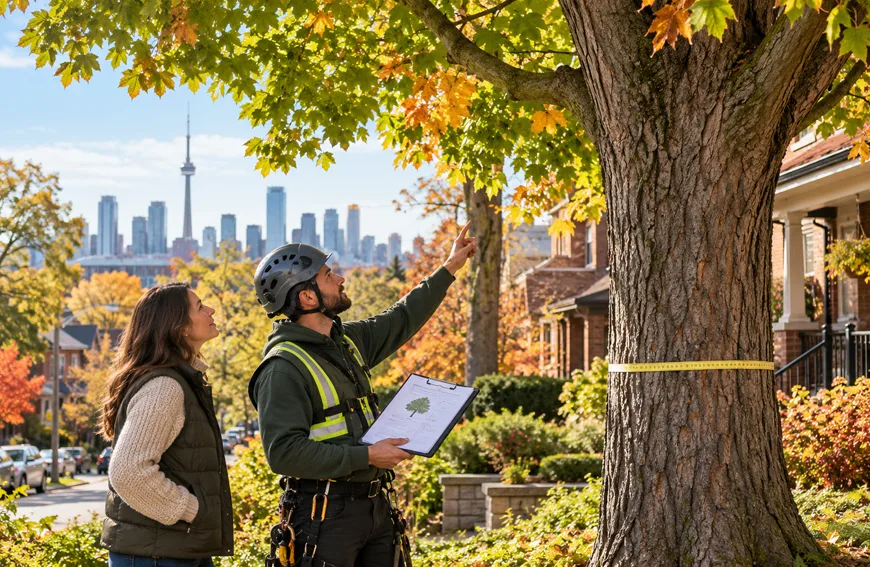
So today, a private tree needs a permit to be injured or removed if its trunk measures 30 cm or more in diameter at 1.4 metres above ground. If you’re unsure where your tree falls, our tree removal permit service can measure it and tell you whether an application is required.
The New Distinctive Tree Category
The biggest structural change is a new category for large, healthy trees. Any tree on private property or in a ravine area that measures more than 61 cm in diameter can now be identified as a Distinctive Tree. For a sense of scale, the City compares that to the width of a typical car tire.
City staff identify these trees, and they must be specifically considered during the permit review. In practical terms, expect closer scrutiny if you apply to remove a large, healthy tree. A detailed arborist report explaining the tree’s condition and the reasons for removal becomes even more important.
Newly Planted Trees Are Now Protected at Any Size
Under the old rules, a young tree under 30 cm was generally exempt. That’s no longer true for every sapling. Trees planted as a condition of a development approval or as part of a bylaw enforcement action now require a permit to injure or remove, regardless of size.
This matters if you bought a new build with replacement trees on the lot, or if you planted trees to satisfy an earlier permit. Those young trees are protected from day one.
Stricter Enforcement for Unpermitted Removals
Removing a protected tree without a permit was already risky. Fines under the existing bylaw range from $500 to $100,000 per tree. The new rules close some of the gaps people used to rely on:
- Stump measurements count. A stump of 40 cm or larger can now be used as evidence when the original trunk can’t be measured.
- Replacement ratios are higher. Contravention-related replanting now follows a diameter-based system starting at 5:1, rising for larger trees.
- Outcomes go public. Permit and contravention results will be published quarterly on the City’s Open Data Portal.
- Fine guidelines are being updated. Recommendations will weigh tree size, condition, and significance.
New Fees for Ravine Permits
If your property sits within a ravine or natural feature protection area, permit applications now carry fees. These apply to regulated work such as tree injury, removal, and grade changes:
- Ravine tree, non-construction: $87.57 per tree
- Ravine boundary or neighbour tree, non-construction: $183.03 per tree
- Ravine tree, construction: $262.72 per tree
- Ravine boundary or neighbour tree, construction: $549.08 per tree
- Grade alteration with no trees: $632.51 per application
Voluntary stewardship work and some eligible projects are exempt.
A Grant to Help Maintain Large Trees
Not every change is a restriction. The City’s new Mature Private Tree Maintenance Grant helps homeowners cover the cost of caring for large, healthy trees over 61 cm in diameter. Applications open October 15 and close November 16, or earlier if funds run out.
Eligible work typically supports keeping the tree healthy and safe, such as structural pruning and deadwood removal. If you have a large tree that’s overdue for care, now is a good time to plan professional tree trimming and pruning and check the program details on the City’s grant page.
What to Do Before Booking Tree Work This Fall
If you’re planning a removal, renovation, or landscaping project in Toronto, follow these steps:
- Measure the trunk at 1.4 metres above ground, including trees near your property line.
- Check whether you’re in a ravine area, since separate rules and fees apply.
- Get an arborist assessment before applying, especially for trees over 61 cm.
- Apply for the permit and wait for approval before any cutting or root work.
- Protect remaining trees during construction with proper tree protection hoarding.
Skipping a step can lead to stop-work orders, fines, and replanting costs that far exceed the price of doing it right.
Get Help From a Local Arborist
Five Star Tree Care works with homeowners across Toronto, Richmond Hill, Markham, Vaughan, and the wider GTA. We handle tree measurement, arborist reports, permit support, and the tree work itself once approval comes through.
Call us at (416) 990-3355 or visit us at 156 Duncan Rd, Richmond Hill, ON L4C 6J8. You can also request a free quote online and we’ll help you figure out what your property needs under the new rules.