

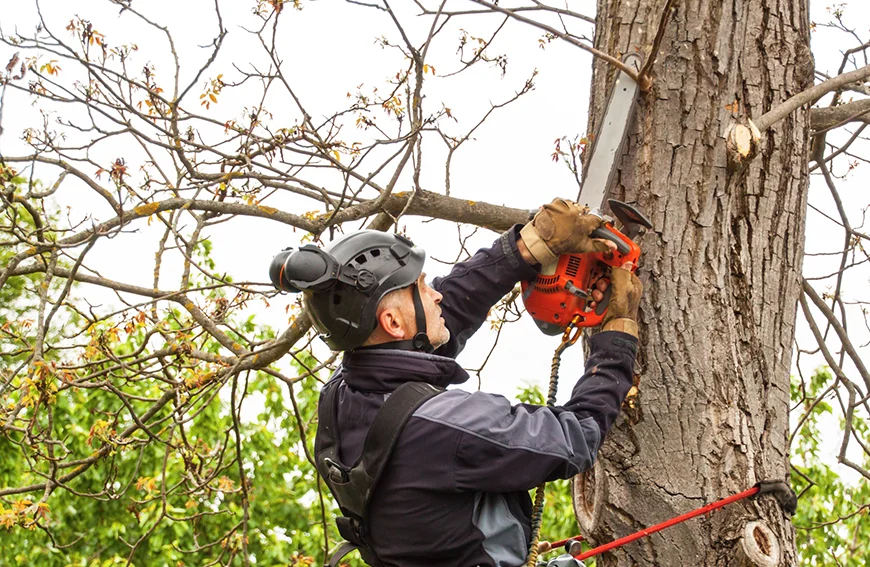
Knowing when to prune your trees significantly boosts their health, safety, and longevity. Proper timing can avoid stress, encourage vibrant growth, and reduce disease risk. As certified arborists, we’ve gathered expert advice to help you prune wisely and keep your trees thriving year-round.
Dormant Season Is Generally Best
Late winter to early spring—before buds break—is often the ideal time to prune. Trees are dormant, which means:
- Minimal sap flow and stress
- Easier visibility of branches without foliage
- Lower risk of disease and insect infestation
- Quick recovery when growth resumes
This timing is suitable for most deciduous trees, including maples, oaks, birches, and fruit trees.
When Early Spring Makes Sense for Fruit Trees
Fruit trees benefit from pruning during their dormant state, typically between late winter and early spring. This:
- Enhances air circulation and light exposure
- Encourages healthy branching and fruit production
- Sets the framework for the season ahead
For many apple, pear, and cherry trees, pruning up to March or early April works well—as long as it’s before bud break.
Summer Pruning: Use Caution
Though not ideal, light pruning in mid-to-late summer is acceptable when done properly. This includes:
- Removing dead or hazardous branches
- Managing overgrowth or safety risks
Avoid major cuts or shaping during this hot, active growth phase. Fresh wounds may not heal quickly and insects or diseases can exploit them.
Fall Pruning: Know the Risks
Pruning in fall is generally discouraged, especially for major cuts. It can:
- Stimulate new growth that won’t harden before winter
- Result in slow wound healing
- Leave trees vulnerable to cold damage or pathogens
However, removing obviously dead or dangerous limbs is acceptable any time.
Special Considerations for Maples and Birch
Certain species like maple, birch, and walnut bleed sap more heavily when pruned in spring. While not harmful, the sap flow is unsightly. For these species:
- Aim for late spring when sap flow slows
- Or prune in early summer for aesthetic control and reduced risk
Removing Dead or Dangerous Branches—Anytime
When safety is at risk, don’t wait for the “perfect” season. Damaged, cracked, or hanging branches should be addressed immediately—regardless of timing—to protect property and loved ones.
What Homeowners Can Do
- Regular inspections for deadwood, broken limbs, or leaning trees
- Light maintenance that removes no more than 10–15% of live canopy
- Follow species-specific timing guidelines when possible
- Trust certified professionals for large or hazardous pruning jobs
Why Timely Pruning Matters
Correct pruning timing improves wound recovery, reduces disease risk, and supports robust growth. Whether you’re shaping young shade trees, maintaining fruit-bearing branches, or dealing with storm damage, proper timing is crucial.
Schedule Smart Tree Care with Five Star Tree Services
When it comes to tree care, timing is everything. At Five Star Tree Services, we provide seasonally appropriate pruning, safety-first removal, and long-term maintenance that protects your property and enhances your landscape. Contact us today to schedule an expert evaluation and ensure your trees get the care they need exactly when they need it.