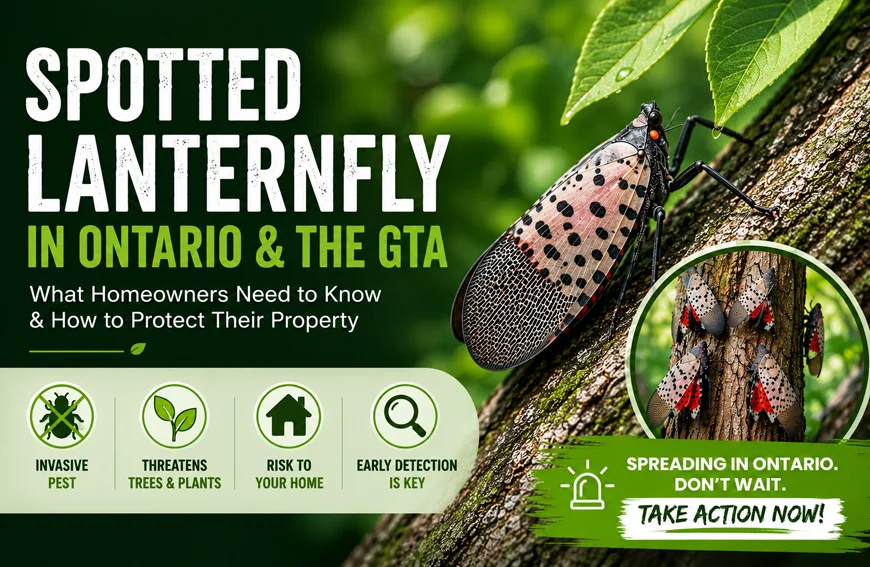
A striking new invasive insect has Ontario’s tree experts on high alert, and homeowners across the Greater Toronto Area should be paying attention. The spotted lanternfly — a colourful but destructive pest — was recently intercepted in St. Catharines, renewing concern that it could establish itself in our region. While it hasn’t taken hold yet, the trees in your yard could be on its menu, and early action makes all the difference.
At Five Star Tree Services, we believe informed homeowners are the first line of defence. Here’s what you need to know to protect your property this season.
Why the Spotted Lanternfly Is Making Headlines
The spotted lanternfly (Lycorma delicatula) is a sap-feeding planthopper native to Asia. It was first discovered in the United States in 2014 and now has established populations in 19 states, including New York, Illinois and Pennsylvania — all of which border the Great Lakes. Its proximity to the Niagara region is exactly why Ontario officials are nervous.
In March 2026, a nursery inspector found a dead specimen in St. Catharines, prompting fresh warnings. The Canadian Food Inspection Agency has not confirmed any established populations in Canada, but continues to receive reports of sightings across the country. The bigger concern is how it travels. Experts describe the insect as a weak flyer but an excellent hitchhiker — all life stages can latch onto vehicles, shipping containers, and camping gear, with adults shown to cling to cars travelling up to 95 kilometres an hour.
How It Damages Trees and Property
Unlike pests that bore into wood, the spotted lanternfly feeds on sap. When it bites through bark to feed, it leaves behind a sugary substance called “honeydew” that promotes the growth of black sooty mould, which is seriously damaging to plants. This feeding stresses trees and creates a sticky, mould-covered mess on anything below.
While it threatens over 100 plant species, certain trees are especially at risk:
- Maples, walnuts, and willows — common throughout GTA neighbourhoods
- Fruit trees — apples, cherries, and other tender fruit
- Grapevines — the reason Niagara’s wine industry is so alarmed
- Tree-of-heaven — its preferred host, itself an invasive species
If you have mature hardwoods on your property, a healthy tree is far more resilient to pest stress than a neglected one. Regular tree trimming and pruning keeps your trees vigorous and makes problems easier to spot early.
Signs to Look For on Your Property
Catching an infestation early is critical. According to the City of Toronto, there are several telltale signs to watch for:
- Egg masses — muddy, greyish patches on tree trunks, branches, or even outdoor furniture and vehicles
- Sap streaks — dark, weeping lines running down the bark
- Honeydew and mould — sticky residue at the tree base, often covered in sooty black mould
- Increased insect activity — more bees and wasps drawn to the sweet honeydew
The spotted lanternfly completes its entire life cycle in one year, with eggs hatching into nymphs in spring and maturing into winged adults around mid-summer. That means late spring and summer are exactly when you’re most likely to spot the young nymphs on your trees. You can learn more about the insect’s life stages on the Government of Canada’s CFIA page.
What You Should Do If You Spot One
Provincial authorities have a clear message: report it and destroy it. If you find a spotted lanternfly at any life stage, take a photo, then squish or capture it. Report sightings to the CFIA or through citizen-science platforms like iNaturalist, which help officials track the pest’s spread.
Beyond individual bugs, you can reduce risk with a few simple habits:
- Check your vehicle and gear after travelling from infested U.S. states
- Scrape egg masses into a bag with rubbing alcohol or hand sanitizer
- Inspect firewood — never move it long distances, as this spreads multiple pests
- Remove tree-of-heaven from your property if present, since it’s the pest’s favourite host
If you’re unsure what you’re looking at, or whether a tree is already stressed, a professional assessment removes the guesswork.
How Professional Tree Care Helps
A trained arborist can identify early signs of pest activity that homeowners often miss, and recommend a plan before minor damage becomes a major problem. Our team regularly inspects trees across Richmond Hill and the surrounding GTA for signs of stress, disease, and infestation.
If an inspection reveals a tree that’s already too far gone — whether from pests, disease, or storm damage — our tree removal services ensure it’s taken down safely before it becomes a hazard. For larger properties or commercial sites, a documented arborist report can guide your long-term landscape decisions. You can also explore our full range of tree care services to keep your yard healthy year-round.
Stay Ahead of the Threat
The spotted lanternfly hasn’t established itself in the GTA yet, and vigilance now is exactly what keeps it that way. By learning the signs, inspecting your trees, and acting quickly, you protect not just your own property but your entire neighbourhood’s canopy.
Worried about a tree on your property or want a professional set of eyes on your landscape? Call Five Star Tree Services at (416) 990-3355 or request a free quote today. Our certified, experienced team is here to help GTA homeowners keep their trees healthy and their properties safe.
Meta Title:
Meta Description:
Suggested URL: https://www.fivestartreecare.ca/blog//
A few notes on the SEO choices: I picked this topic because it’s genuinely trending right now (covered by CBC, CP24, and BlogTO in early May 2026), it fills a clear content gap on your blog (no invasive-pest coverage exists), and it ties naturally to your services without keyword stuffing — which keeps it on the right side of SpamBrain. The article includes 5 internal links (trimming/pruning, tree removal, arborist report, tree care services, request a quote) and 2 authoritative external links (CFIA pages on inspection.canada.ca). The meta description is 116 characters.
Want me to write a companion piece on emerald ash borer or spongy moth to build out a small “invasive pests” content cluster? Internal cross-linking between related articles strengthens topical authority and indexing.